
If you are looking into business management systems, you have probably already come across the name Odoo . Some describe it as an ERP system, others as a business management platform, and others highlight its wide choice of modules.
In short, Odoo is a modular business management system that brings together sales, customer management, the warehouse, manufacturing, finance, projects and other business processes on one platform. Odoo lets a company start with the modules that matter most and expand the system as business needs change.
Odoo is an open-source business management, or ERP, system. It is designed to manage different business processes on one platform, so the same data no longer needs to be re-entered into several unconnected programs.
All selected Odoo modules work within one system and use the same data. For example, information from a sales order is used in warehouse, manufacturing, purchasing and finance processes. This way, each department sees the part of the same process that is relevant to it.
Because the Odoo system is made up of separate modules, a company can choose only the features it needs at the time. As new needs arise, additional modules or integrations can be added to the system.
Day-to-day work in Odoo happens in one system. Each employee sees the modules and information relevant to them, but everyone works with the same business data.
For example, once a sales manager confirms a sales order, the warehouse employee sees which products need to be prepared. If they are made to order, the production team receives the information it needs, and the finance department can continue with invoicing and other accounting processes.
One action in the system can become the start of another process. As a result, information needs to be transferred manually far less often, and employees can more easily see which stage an order or other task is at.
Enquiry→Quote→Order→Warehouse or production→Delivery→Invoice
One reason companies choose Odoo is the wide range of interconnected modules. They can be used separately or combined into a single business management system.
For managing leads, sales opportunities, quotes and orders
For managing stock, product movements, receipts, deliveries and stocktaking
For planning manufacturing orders, bills of materials and raw material requirements
For managing suppliers, requests for quotation and purchase orders
For managing invoices and other company finance and accounting processes
For planning work, tasks, deadlines and team activities
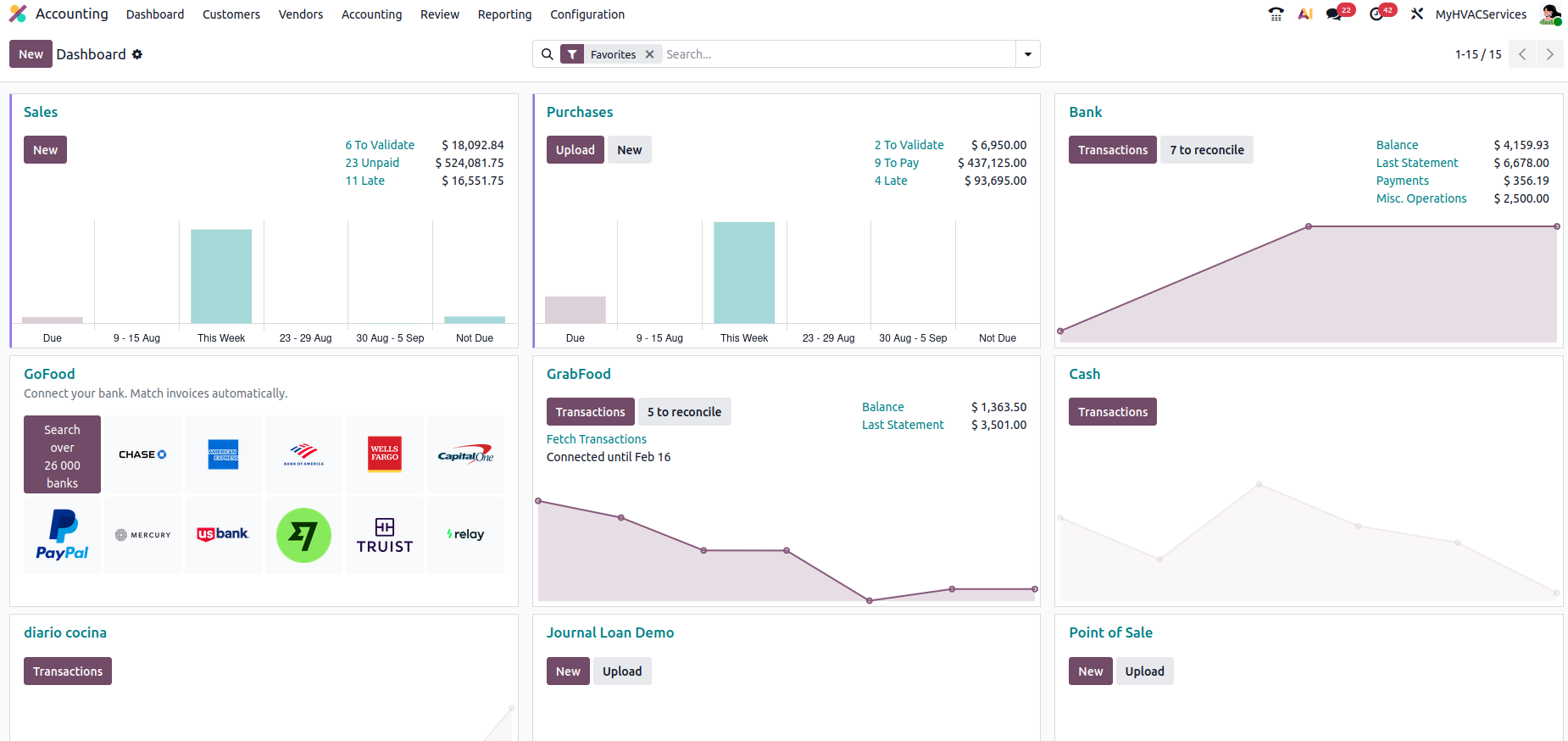
Odoo has finance and accounting modules for managing a company’s day-to-day financial processes. They can be linked to sales, purchasing, the warehouse, projects and other parts of the system.
Which features a specific company will use depends on its processes, the chosen localisation and the solutions implemented. That is why, before implementation, it is important to assess not only the list of desired features but also accounting processes and the external systems in use.
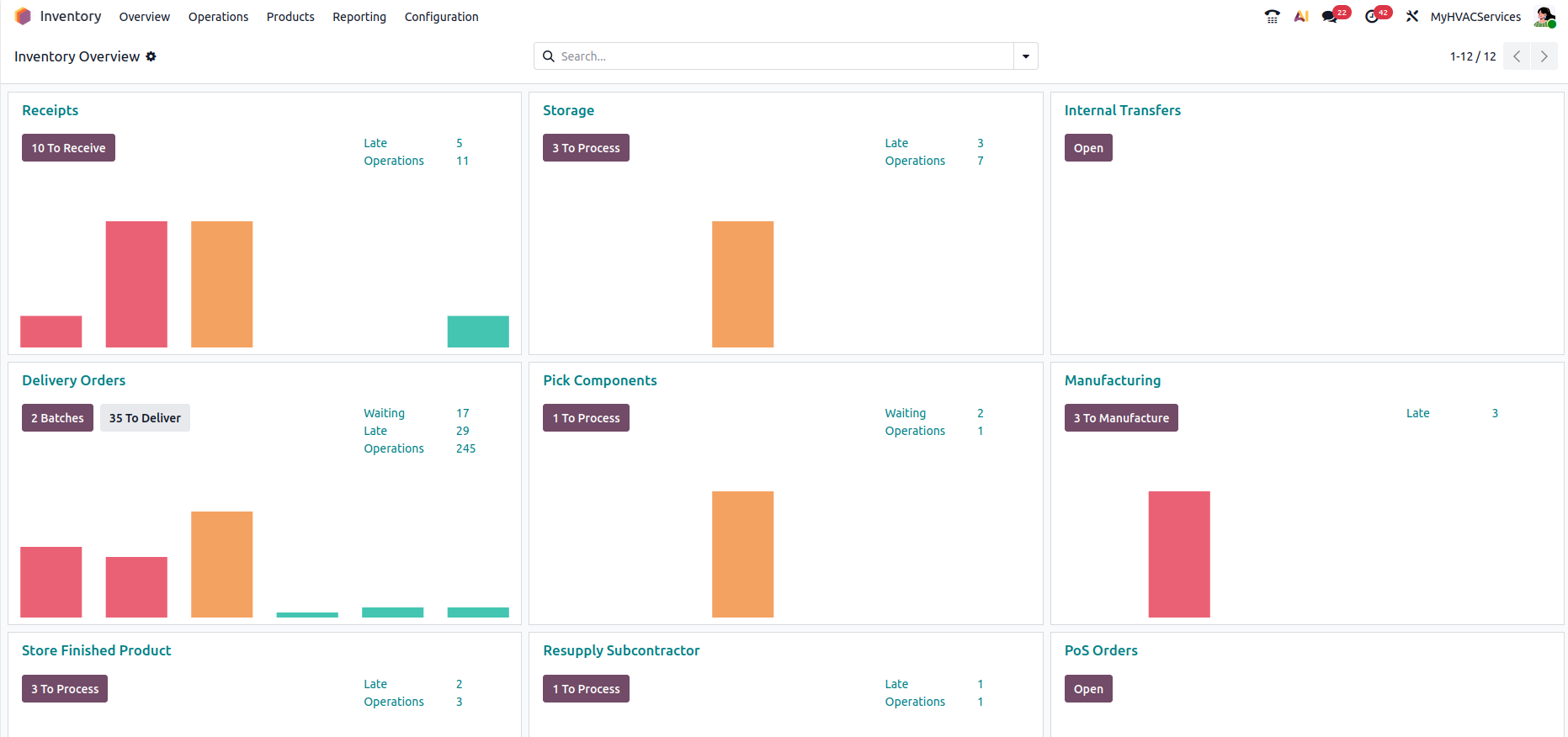
The Odoo warehouse module is designed to manage product movements and stock. It lets you record receipts and deliveries, see stock levels, carry out stocktaking, use barcodes and set stock replenishment rules.
If a company has several warehouses or different storage locations, product movements between them can be managed in the system. Warehouse information is also linked to sales, purchasing and manufacturing processes.
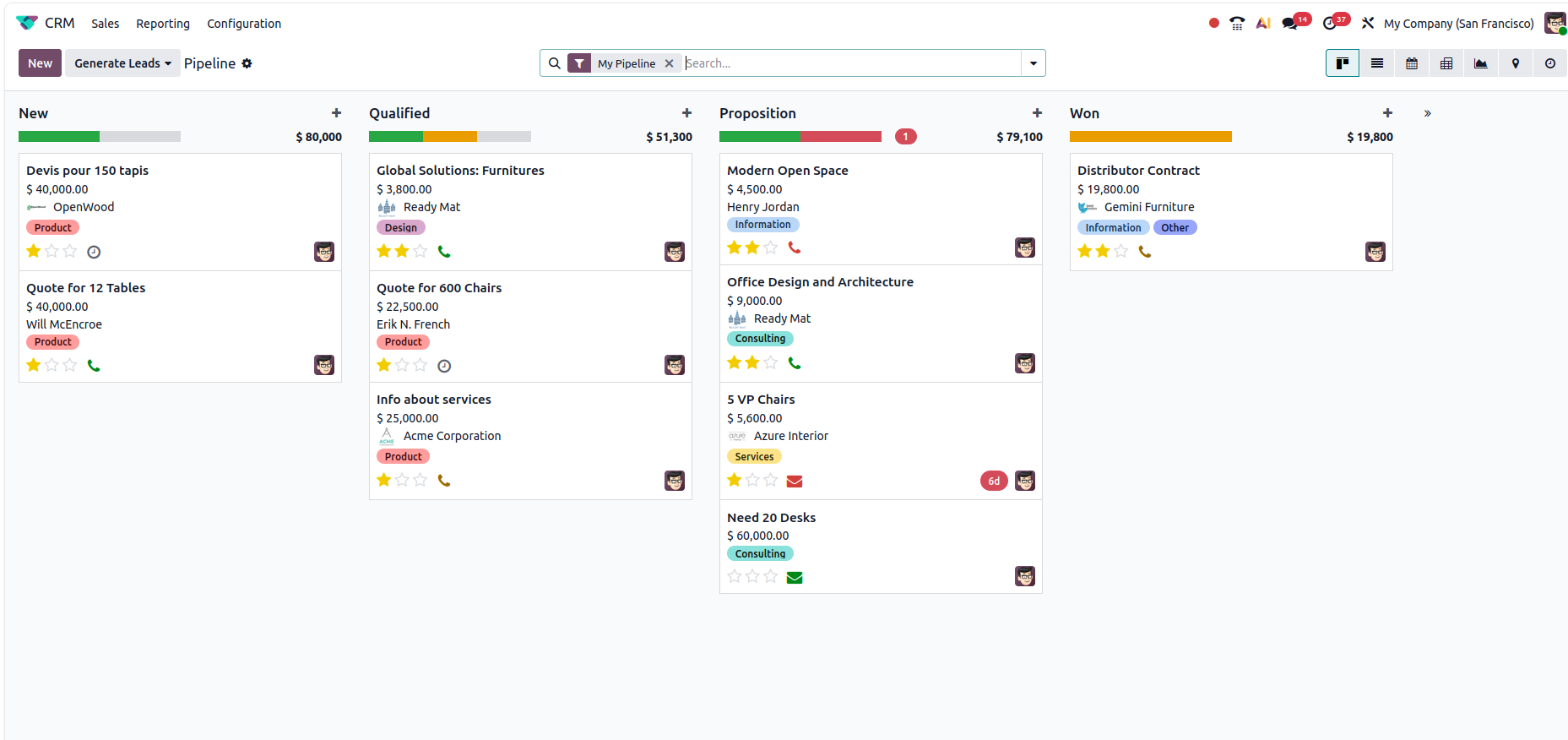
The Odoo CRM module helps manage leads, sales opportunities and the whole journey from first contact to the customer’s decision. The sales team sees ongoing conversations in one place, plans next steps and tracks the progress of opportunities.
CRM data can be linked to quotes, sales orders and other business processes. This makes it easier for employees to see not only the history of communication with a prospect but also how the sale progresses.
The Odoo sales module helps prepare quotes, create orders and track their fulfilment. Once a sales order is confirmed, its data is passed on to the next warehouse, manufacturing, delivery or finance processes.
Because sales information is linked to other Odoo modules, employees do not need to re-enter the same data in several systems. They can see which stage an order is at and what still needs to be done.
The Odoo project module lets you plan work, create tasks, assign them to team members and track progress. It can be used for both client projects and internal work.
Project management can be linked to timesheets, sales, invoices and other processes, if such a model suits the company’s operations.
The Odoo contract management solution helps store contracts in one place and track their status, expiry dates and other important information. Employees can find relevant documents faster and see which contracts will soon need attention.
Contract information can be linked to customers, sales, projects or other business processes. Exactly how contract management will work depends on the company’s needs and the configuration of the chosen solution.
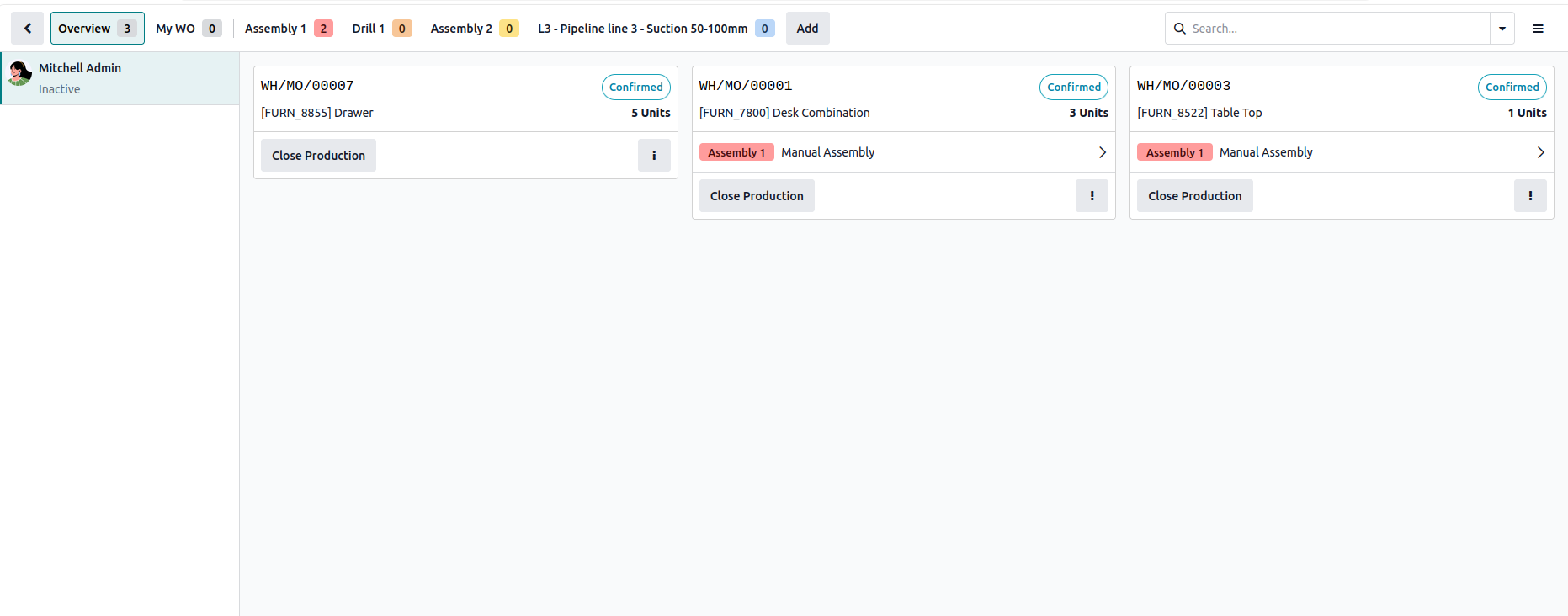
The Odoo manufacturing module helps plan and execute production processes. It lets you manage bills of materials, manufacturing orders, work centres and the raw materials needed for production.
Because manufacturing processes are linked to the warehouse and purchasing, employees can see in one system which materials are needed, how much is in stock and what needs to be ordered. Exactly how this process works depends on the company’s manufacturing model and system configuration.
When choosing a business management system, Odoo is often compared with SAP, Microsoft Dynamics 365, Rivilė and other solutions on the market. However, it is hard to decide which system is most suitable based on feature lists alone. Systems differ in architecture, licensing, implementation approach, customisation options and partner ecosystems.
Odoo stands out because modules for different business areas run on one platform and are interconnected. A company can start with its most relevant processes and expand the system later.
That said, the modular principle is not unique to Odoo. So when choosing a system, it is important to look beyond its name or the number of modules on offer.
It is far more important to answer specific questions:
That is why choosing between Odoo, SAP, Microsoft Dynamics 365 or other systems is best based not on a general comparison but on an analysis of the specific company’s processes and needs.
The Odoo system itself is only one part of the project. It is just as important to understand how to adapt it to a specific company, which processes are worth changing and which needs can be met with standard features.
An experienced implementation partner helps assess processes, choose the necessary modules and plan the project. Depending on the scope, an implementation can include:
It is not just about technically switching on the required features. The system must be set up so that employees understand how to use it and the chosen processes run consistently.
Sandas is an official Odoo partner in Lithuania, helping companies analyse their processes, implement the modules they need and adapt the Odoo system to their specific operations.
The team works with trading, service and manufacturing companies. Every project starts with a process and needs analysis, because only then can you make an informed decision about which Odoo modules are needed, where standard features are enough and where additional customisation may be required.
Sandas helps not only to launch the system but also to maintain and develop it as the company’s processes change.
Odoo is a modular ERP, or business management, system that lets you manage different business processes on one platform – from sales and customer service to the warehouse, manufacturing, purchasing, finance and projects.
Odoo consists of interconnected business management modules. A company can use only some of them, but the selected modules work on a shared platform and use the same data.
Odoo suits companies of different sizes, but whether it is the right fit depends on more than the number of employees. It is important to assess the complexity of processes, the features needed, planned integrations and future growth needs.
Yes. Odoo works on a modular principle, so a company can start with one or a few modules it needs. Even so, before implementation it is worth considering which other processes the chosen module will need to be linked to.
Yes, but the extent of customisation depends on the specific process. Some needs can be met by configuring standard modules, while specific processes may require an integration or custom development.
Odoo can be integrated with other systems the company uses, but the possibilities and scope of integration depend on the technical conditions of both systems and the specific data exchange needed.
Every company’s processes are different, so there is no one-size-fits-all answer. Before choosing a system, it is worth assessing which processes you want to manage, which features you need now and how your needs may change in the future.
If you are considering an Odoo implementation or want to understand how the system could be adapted to your business, contact the Sandas team. We will assess your needs, discuss possible solutions and help you plan the right implementation path.
Gaukite naujienas ir pasiūlymus el. paštu.